Why Precision Fertilization Is Now a Business Decision
Five years ago, saving fertilizer might have been called a sustainability decision. Today, it looks much more like a business decision.
The economics of farming have changed. Farmers are being asked to produce efficiently, protect their land and reduce environmental impact while facing input costs that turn every application into a financial calculation.
The latest European figures make that pressure visible. In the second quarter of 2026, average agricultural output prices in the EU fell by 5.8% year on year, while input prices rose by 4.7%. Fertilizer and soil improver prices increased by 13.4%, while cereal prices fell by 5.6%, according to Eurostat.
For farmers, this is a difficult combination: spending more to produce into a market that may pay less.
The European Commission estimates that fertilizers account for 7–8% of total input costs across the EU agricultural sector-and considerably more in some types of farming. When prices rise, growers cannot usually pass the full increase on to buyers. The pressure lands directly on the farm margin.
Under these conditions, fertilizer efficiency is no longer only an environmental objective. It is part of financial resilience.
A Maryland farm shows what precision can change
A recent example from Maryland illustrates the potential.
Greg Dell, a grower near Westminster, has spent approximately five years introducing precision agriculture across his family farm. Variable-rate applications are now used throughout the operation, supported by models that consider soil type, weather and crop history.
Dell told DTN that his average nitrogen use had fallen by around 50 pounds per acre compared with three years earlier—approximately 56 kilograms per hectare-without sacrificing yield.
The original motivation for improving nutrient management in the region was closely connected to stewardship of the Chesapeake Bay. Today, the same practices are also helping the farm lower its cost of production.
That changes the conversation.
Sustainability becomes easier to adopt when it also makes economic sense: when reducing an input does not mean accepting a lower yield, but instead means using each kilogram of fertilizer—and every euro or dollar spent on it—more intelligently.
One farm’s result should not be treated as a universal performance guarantee. Fields, crops, seasons and nutrient strategies differ. But the example demonstrates an important principle: reducing fertilizer and protecting yield are not necessarily opposing goals.
The hidden cost of treating a field as an average
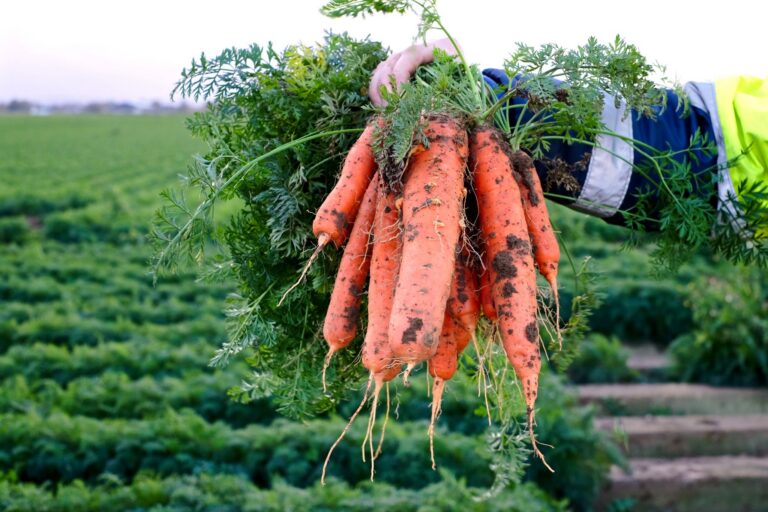
Uniform fertilizer programmes are built on a practical simplification: one field, one rate. But a field is rarely uniform. Soil texture, organic matter, moisture, topography, previous crop performance and existing nutrient availability can all change within the same parcel. Two areas separated by only a short distance may not respond to the same application in the same way.
When the whole field receives a single rate, some areas may receive more than the crop is likely to use. Other areas may receive too little, or receive the right nutrient at the wrong time.
In each case, the grower carries the risk:
- unnecessary input costs where nutrients are already sufficient;
- lost yield or quality where a real deficiency is missed;
- nutrient loss where the timing or rate does not match crop uptake;
- limited visibility into why different parts of the field perform differently.
Uniform application is not always wrong. In a genuinely consistent field, a single rate may remain the most practical option. The purpose of precision agriculture is not to make every decision more complicated. It is to identify when an average is hiding differences that are economically significant.
Why should inputs remain uniform when the field is not?
Precision agriculture needs more than a yield map
Variable-rate equipment can change the amount applied across a field. But the ability to vary an application does not automatically mean that the prescription is correct.
This distinction matters particularly for nitrogen.
Yield history can be useful, but yield alone does not reliably explain how much nitrogen a crop needs. Soil organic matter, mineralisation, water availability, weather, previous crops and earlier nutrient applications can all change the crop’s response.
The University of Minnesota Extension has cautioned against building nitrogen prescriptions solely from yield expectations. Its field experience has shown that sophisticated-looking technology can still produce a poor decision when the agronomic assumptions behind it are incomplete.
The evidence for precision agriculture is encouraging, but it is also more nuanced than many technology claims suggest. A 2026 systematic review examined 444 publications on precision agriculture and sustainability. Only 54 contained relevant field-trial or modelling evidence; 45 of those reported environmental benefits, with reduced fertilizer use among the most common outcomes.
The lesson is not that precision agriculture fails. It is that results depend on what is measured, how the information is interpreted and whether the technology changes a real management decision.
Better application equipment needs better evidence behind it.
The missing layer: timely soil nutrient data
Many precision agriculture tools observe what is happening above the ground. Satellite images, drones, crop sensors and yield maps can reveal patterns in crop performance.
But when a decision concerns fertilizer, the grower also needs to understand what is happening in the soil.
A low-performing zone may have insufficient nitrogen. It may also be affected by moisture, compaction, disease, pH, root development or another nutrient imbalance. Applying more fertilizer without distinguishing between these causes can increase costs without solving the actual problem.
Traditional laboratory testing remains essential for many baseline and regulatory applications. The challenge is timing. When samples need to be shipped and results take days or weeks, the information may arrive after the most useful application window has passed.
This is where faster field-level analysis can add a new layer to precision agriculture: not as a replacement for agronomic expertise, but as timely evidence for the next decision.
How SMAGRY supports more precise fertilizer decisions
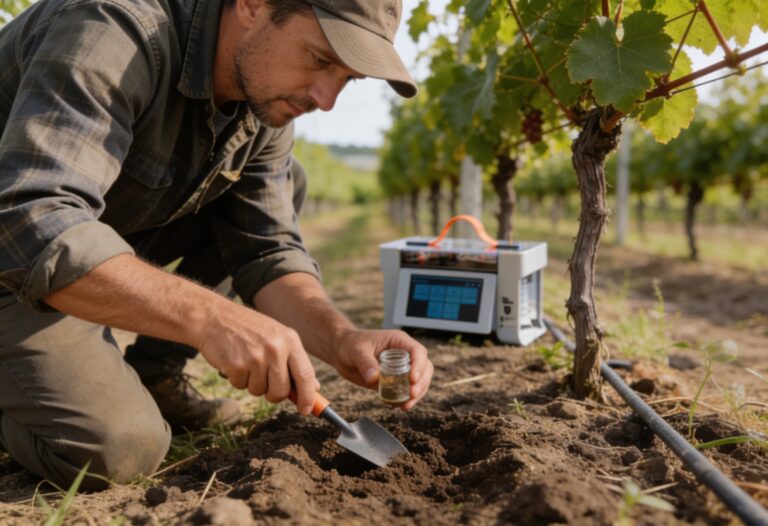
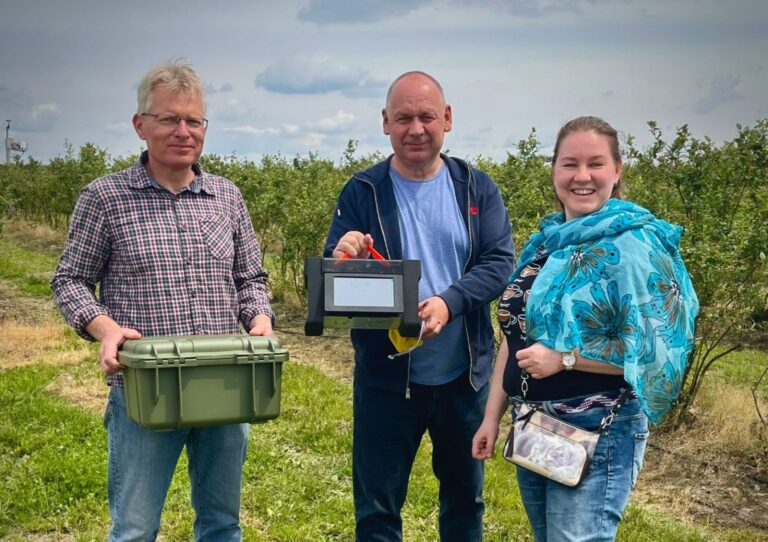
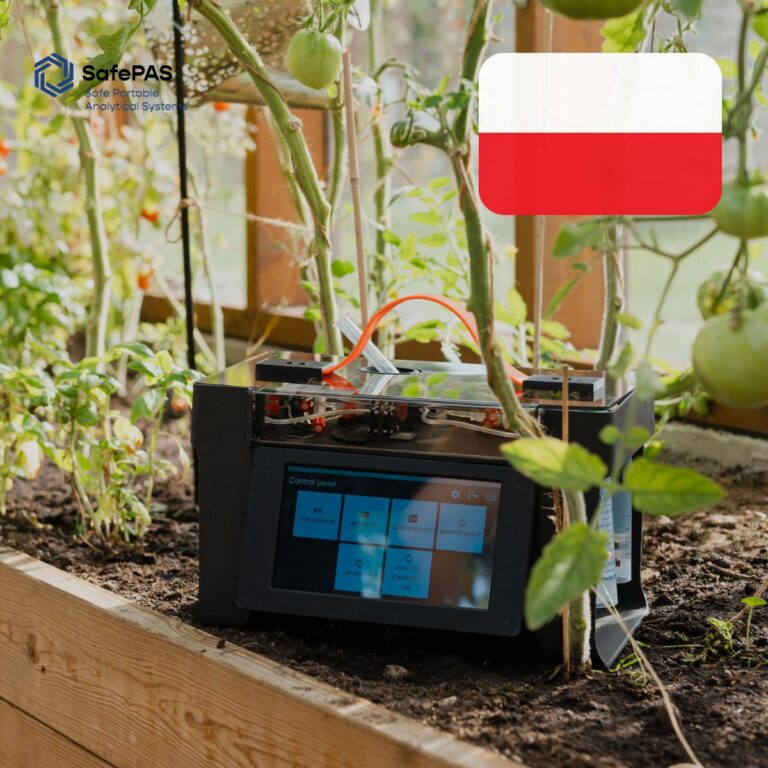
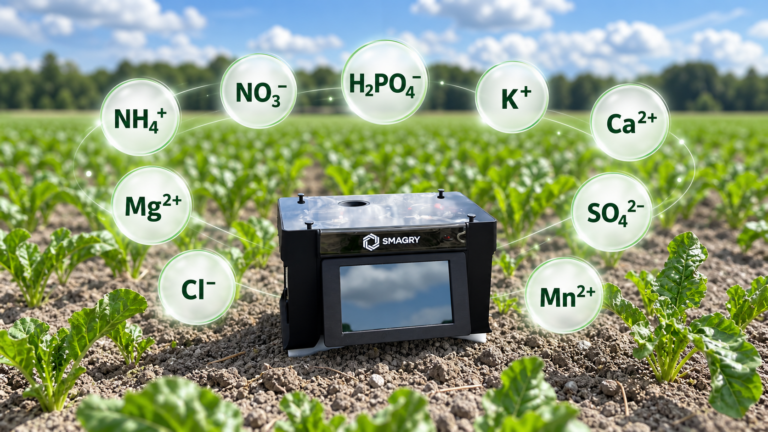
SMAGRY is being developed to bring quantitative soil nutrient analysis closer to the field and closer to the moment when a fertilization decision can still be changed.
The system combines H3A-4 extraction with portable capillary electrophoresis to measure ionic forms of nutrients in a prepared soil sample. The current measurement panel includes:
- ammonium, NH₄⁺;
- nitrate, NO₃⁻;
- phosphate, H₂PO₄⁻;
- potassium, K⁺;
- calcium, Ca²⁺;
- magnesium, Mg²⁺;
- sulfate, SO₄²⁻;
- chloride, Cl⁻;
- manganese, Mn²⁺.
These measurements help show what is present in different parts of a field at a particular decision point. You can read more about the nine ions measured by SMAGRY and the role of rhizosphere-oriented H3A-4 extraction in our previous articles.
SMAGRY is designed to provide quantitative ionic results in under 30 minutes. This creates the possibility of testing separate management zones and using the findings while the application window is still open.
The result is not a fertilizer prescription by itself. It should be interpreted together with the crop, growth stage, expected yield, soil characteristics, field history, weather and local agronomic guidance.
That distinction is essential. The goal is not simply to generate more data. The goal is to produce information that can support a better action.
A practical workflow for field-level nutrient decisions
A precision fertilization process can follow five steps:
- Identify meaningful management zones. Use soil maps, topography, crop observations, yield history, electrical conductivity or other relevant field information.
- Sample each zone consistently. Avoid allowing one composite sample to conceal important differences between areas.
- Measure the nutrients relevant to the decision. For nitrogen management, that may include nitrate and ammonium. Other situations may require information about phosphate, potassium, magnesium or additional ions.
- Interpret the results in context. Combine soil chemistry with crop needs, weather, expected yield and agronomic expertise.
- Apply, record and verify. Adjust the rate, timing or placement where justified, then compare the result with crop performance and later measurements.
The objective is not automatically to apply less everywhere. It is to avoid spending money where an additional application is unlikely to produce value—and to identify areas where intervention is genuinely needed.
From environmental responsibility to operational efficiency
Reducing unnecessary fertilizer can create several benefits at once.
It can lower expenditure, reduce exposure to volatile input prices and decrease the amount of capital committed before harvest. Better timing and placement can also reduce the risk of nutrients being lost before the crop can use them.
The environmental outcome and the business outcome are connected because they come from the same operational improvement: applying the right input where there is evidence that it is needed.
This is why the sustainability conversation in agriculture is evolving.
The future is not about asking farmers to choose between profitability and environmental responsibility. The most useful agricultural technologies should help them pursue both—with decisions grounded in field-specific evidence rather than generalized assumptions.
The most sustainable input is often the input that did not need to be applied.
The most profitable input decision may be knowing where that is true-and where it is not.
This is the kind of smarter, more precise agriculture SMAGRY is working toward.
Interested in evaluating field-level nutrient analysis in your operation?
Request a SMAGRY demonstration or discuss a pilot with the SafePAS team.